
Stephen Featherstone is a Director of Llewelyn Davies with over four decades’ experience in healthcare architecture, master planning and urban design. He has led the preparation of Development Control Plans (DCPs) for NHS Trusts and been involved in major international healthcare programmes. The company has specialised in healthcare planning and hospital design since 1960 and has consistently promoted the philosophy of planning and designing for change. The practice has played a significant role in the evolution of healthcare master planning and the application of DCPs within complex hospital redevelopment programmes.
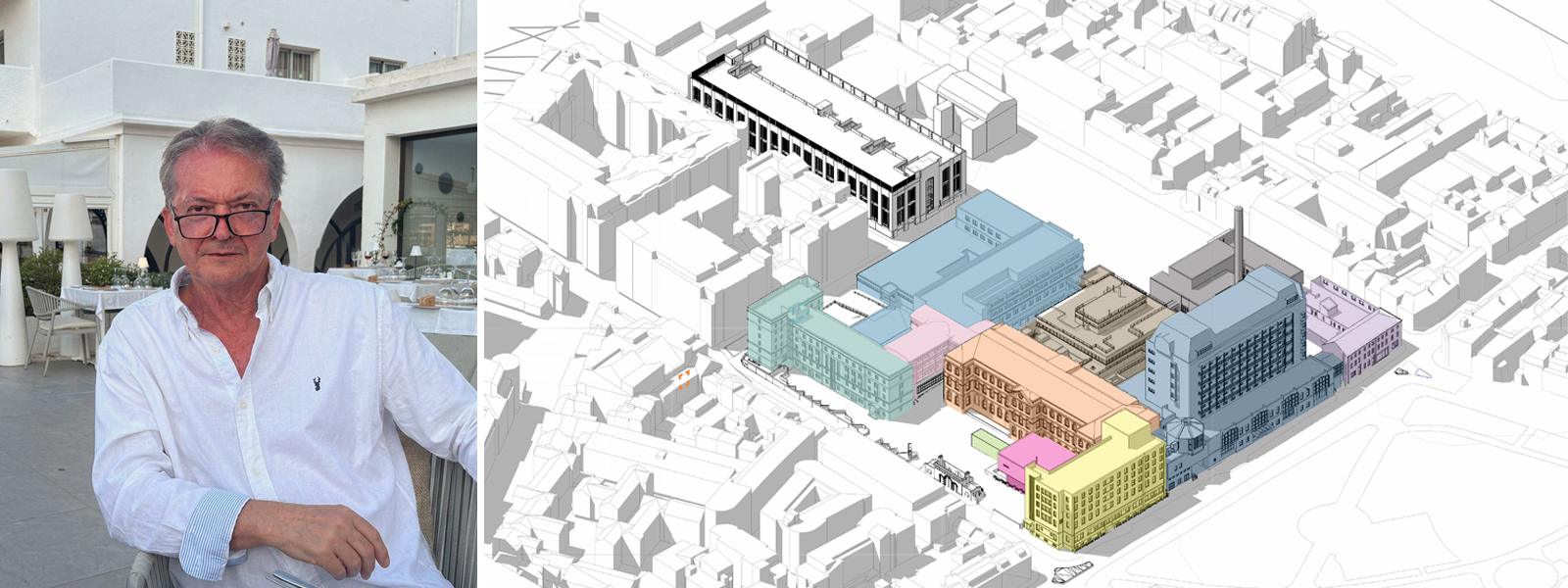
Stephen Featherstone – Lead Director for the New Healthcare Facilities Programme (NHFP) in Jersey, Channel Islands.
What is a Development Control Plan?
The Development Control Plan (DCP) is one of the NHS’s most important—and most misunderstood—strategic planning documents.
Too often regarded as a site masterplan or a collection of planning drawings, the DCP is intended as a strategic framework through which long-term clinical transformation is translated into phased physical development.
Unlike a conventional masterplan, which describes what may be built, the DCP articulates how a healthcare estate can evolve over time whilst maintaining operational continuity, safeguarding future (funding) opportunities and responding to changing clinical priorities.
It is therefore neither a fixed blueprint nor an architectural vision. It is a government framework for the evolution of an estate, driven by clinical need.
Planning for Change
Richard Llewelyn-Davies (R-11-D) argued throughout the 1960s that hospitals should be planned and designed to facilitate change rather as fixed, determinate objects. His work on evolution and flexibility within the context of indeterminate futures established a philosophy that remains fundamental today.
The essential question was never: ‘What building should we construct?’ but rather: ‘How should the hospital evolve over the next fifty years?’, and moreover, as architects and planners, what can we do to enable, not inhibit that change.
During the 1970s and 1980s, NHS authorities commissioned long-term hospital masterplans and site development strategies that embedded many of the principles later associated with the DCP. The concept therefore predates the term.
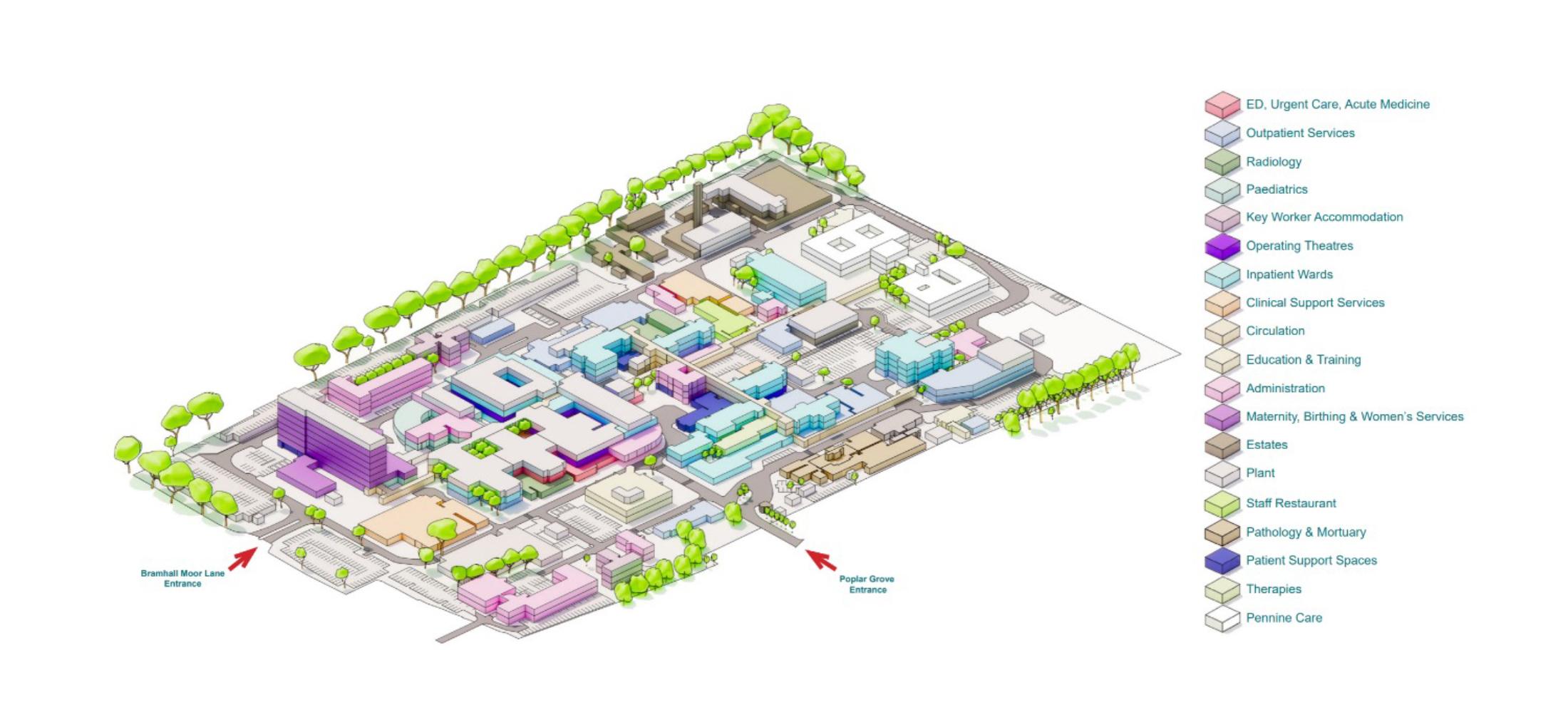
Mapping of existing site departmental locations
The Planning Revolution
A significant change occurred on 1 April 1991.
With the establishment of NHS Trusts, hospital estates ceased to benefit from Crown Immunity and major developments became subject to the statutory planning system. Whilst this did not create the DCP, it fundamentally influenced their ultimate purpose and content.
Previously, long-term site plans primarily served internal estate management functions. Following 1991 they also became instruments through which Trusts could communicate their long-term development intentions to local planning authorities, providing confidence that successive planning applications formed part of a coherent strategy rather than isolated developments.
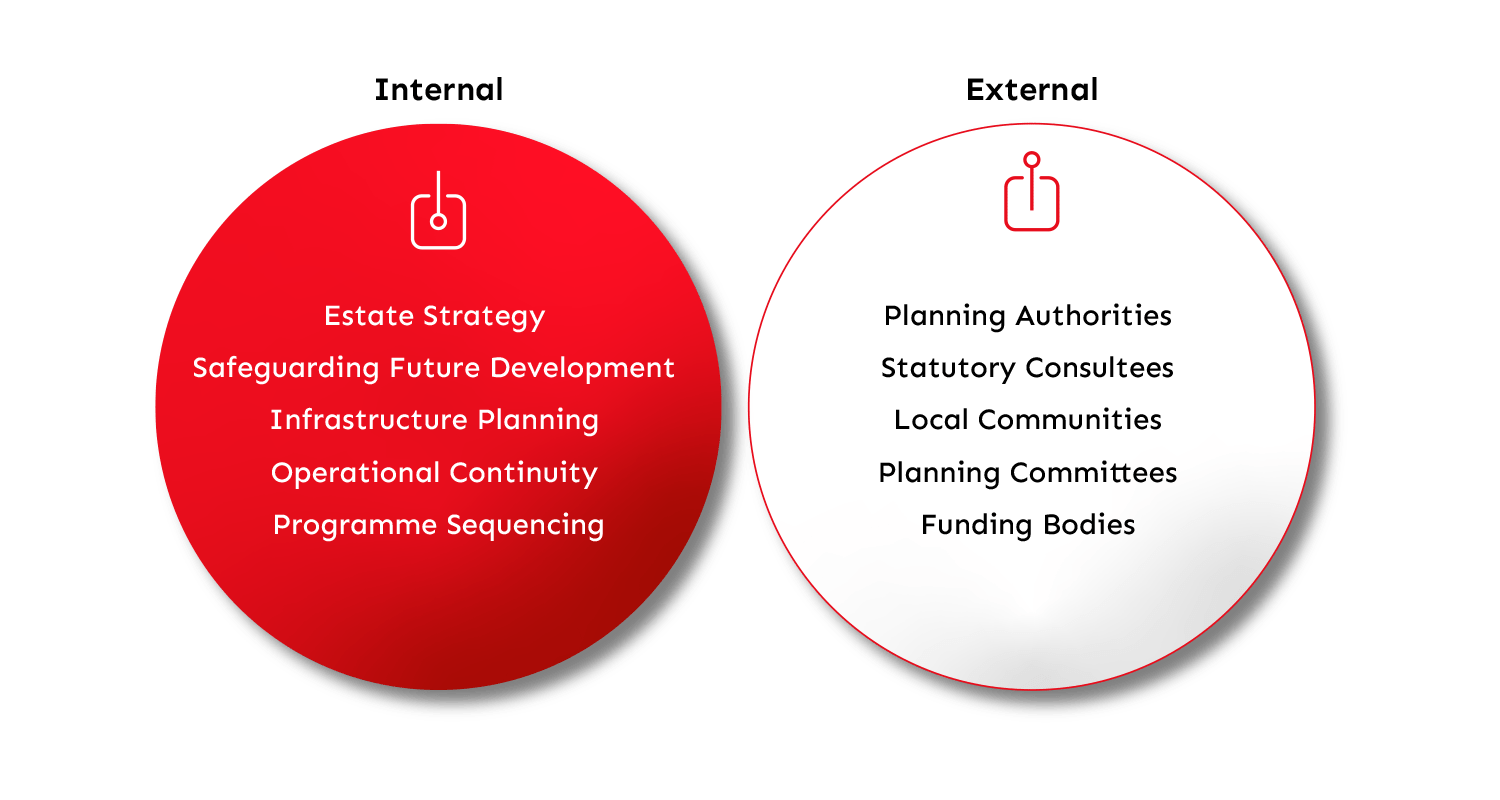
DCPs subsequently evolved into documents serving two distinct audiences, This dual role remains one of the defining characteristics of the modern DCP.
When a DCP Becomes a Masterplan
The increasing influence of statutory planning has had unintended consequences.
As the language of planning policy merged with healthcare planning, Trusts began referring to, and indeed commissioning “masterplans”, when describing DCPs.
In some cases, documents presented as DCPs have become little more than illustrated campus masterplans, rich in architectural, urban design and place-making imagery (all entirely worthy) yet lacking in clinical analysis or interpretation. Driven by building form, development parcels and visual composition, they may satisfy planning authorities whilst failing to demonstrate how future models of care, clinical relationships or operational requirements inform the strategy.
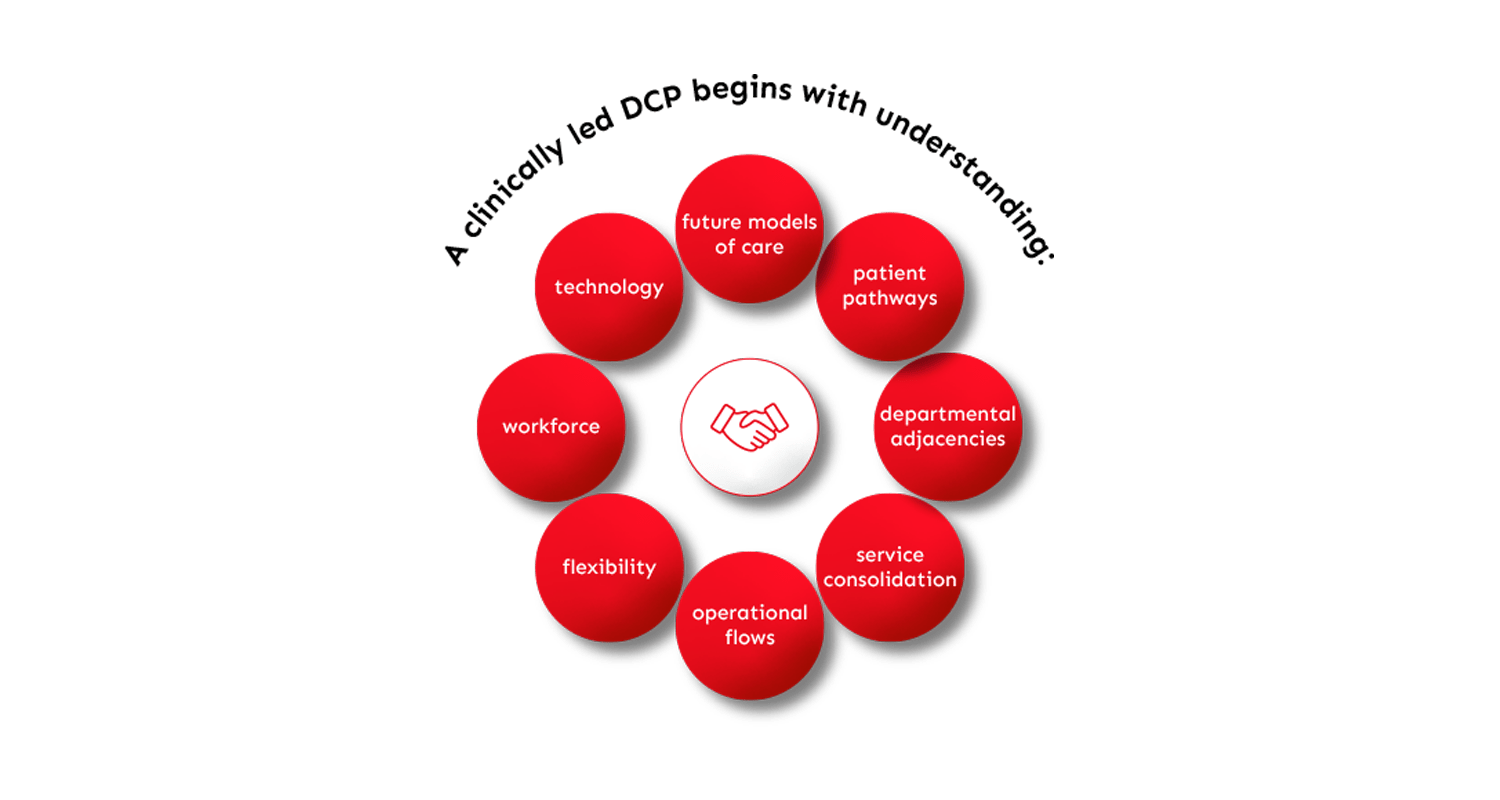
The danger is that physical form begins to determine clinical function (alone) rather than as a reiterative process which assures that clinical optimisation is never overly compromised. A genuine DCP should always remain clinically-led, whilst acknowledging real world opportunities and constraints.
The drawings are simply the visual expression of this strategic analysis.
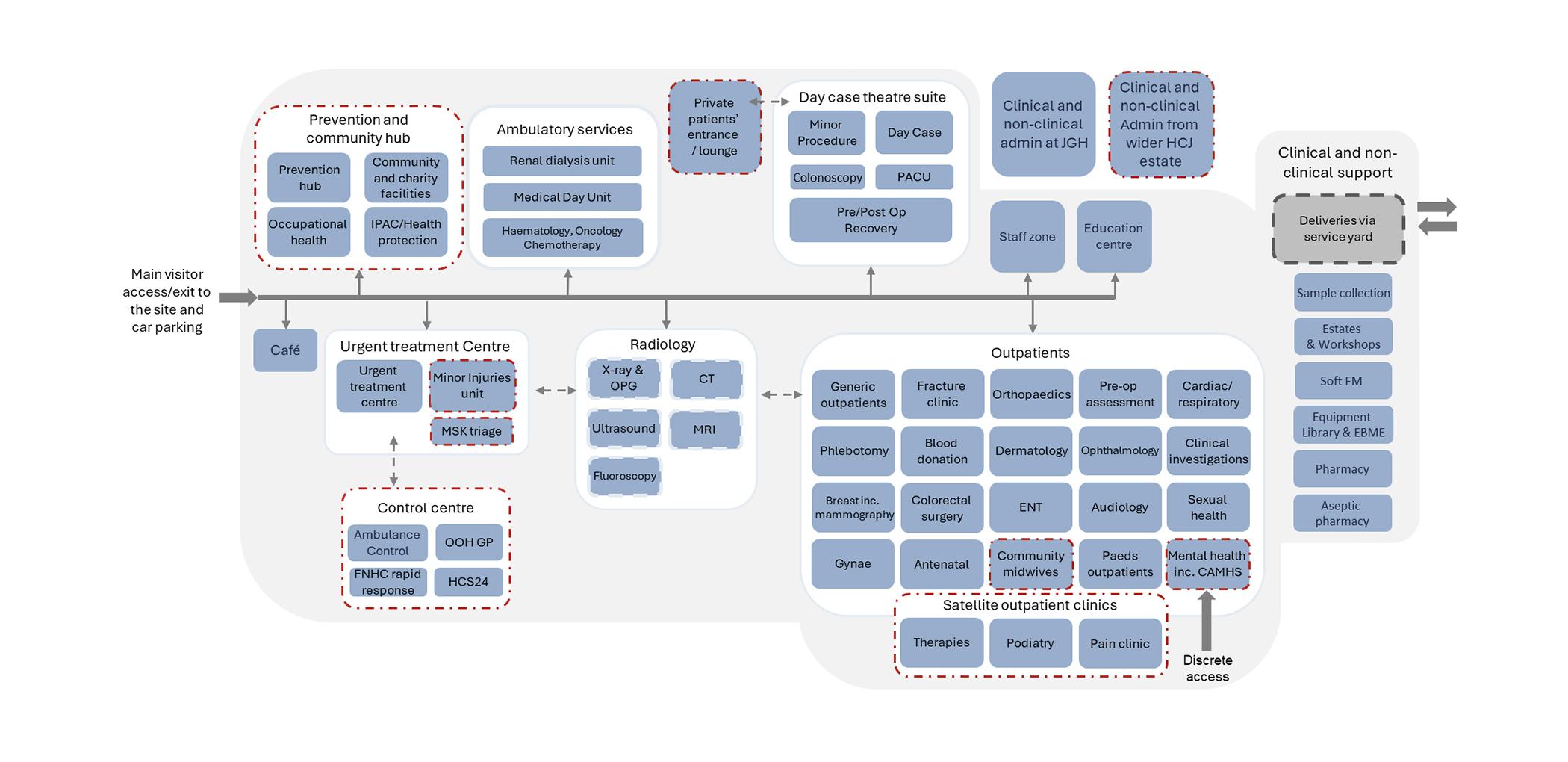
Functional Brief to inform DCP planning (credit: MJM Medical)
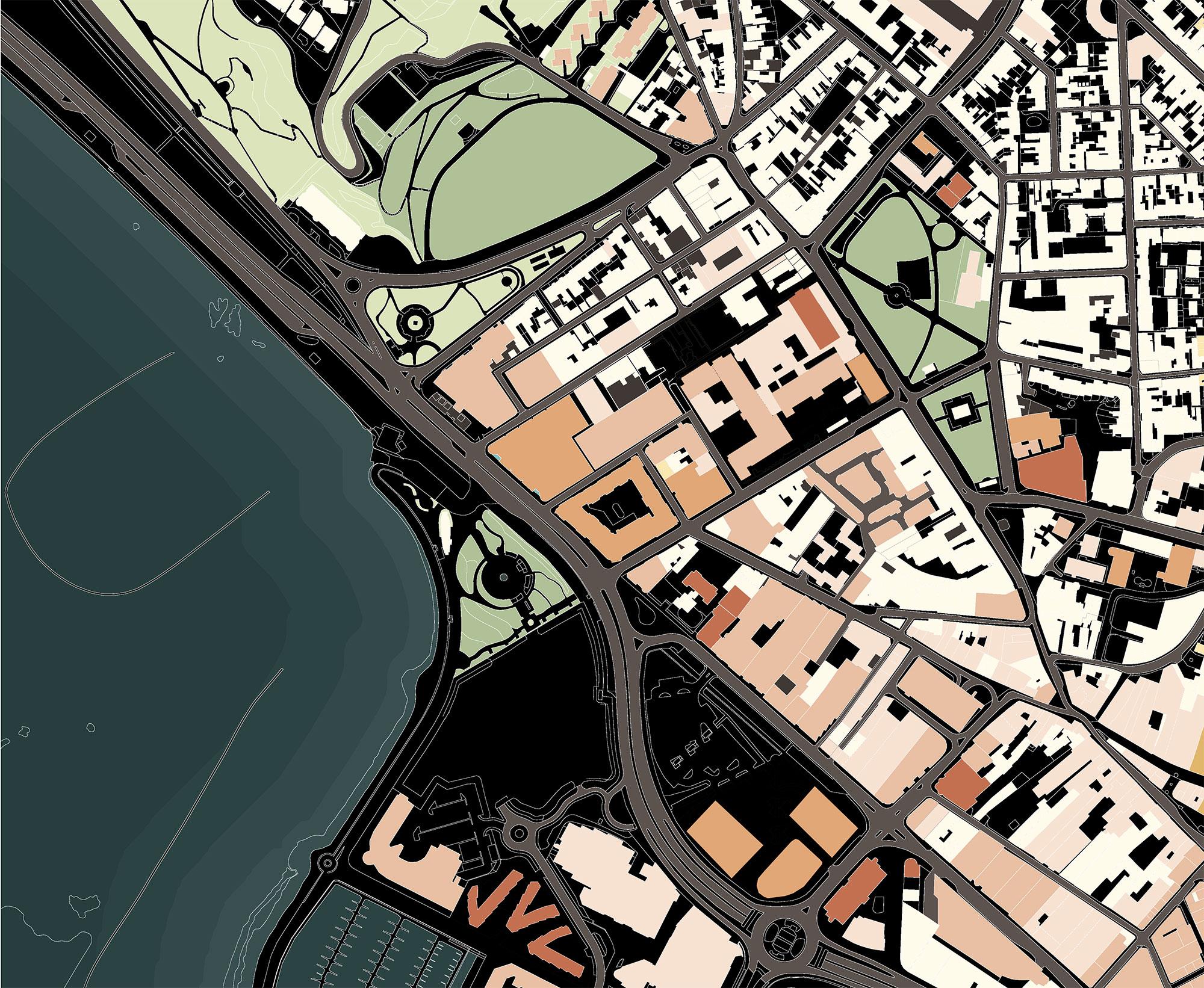
Morphology Analysis – to support development capacity assessment
Strategic Estate Visions
The increasing influence of statutory planning has had unintended consequences.
Increasingly, Trusts are expected to articulate a strategic estate vision supported by a DCP before major capital investment is sought. The intention is clear, ‘before discussing buildings, demonstrate how the estate could support future clinical transformation.’
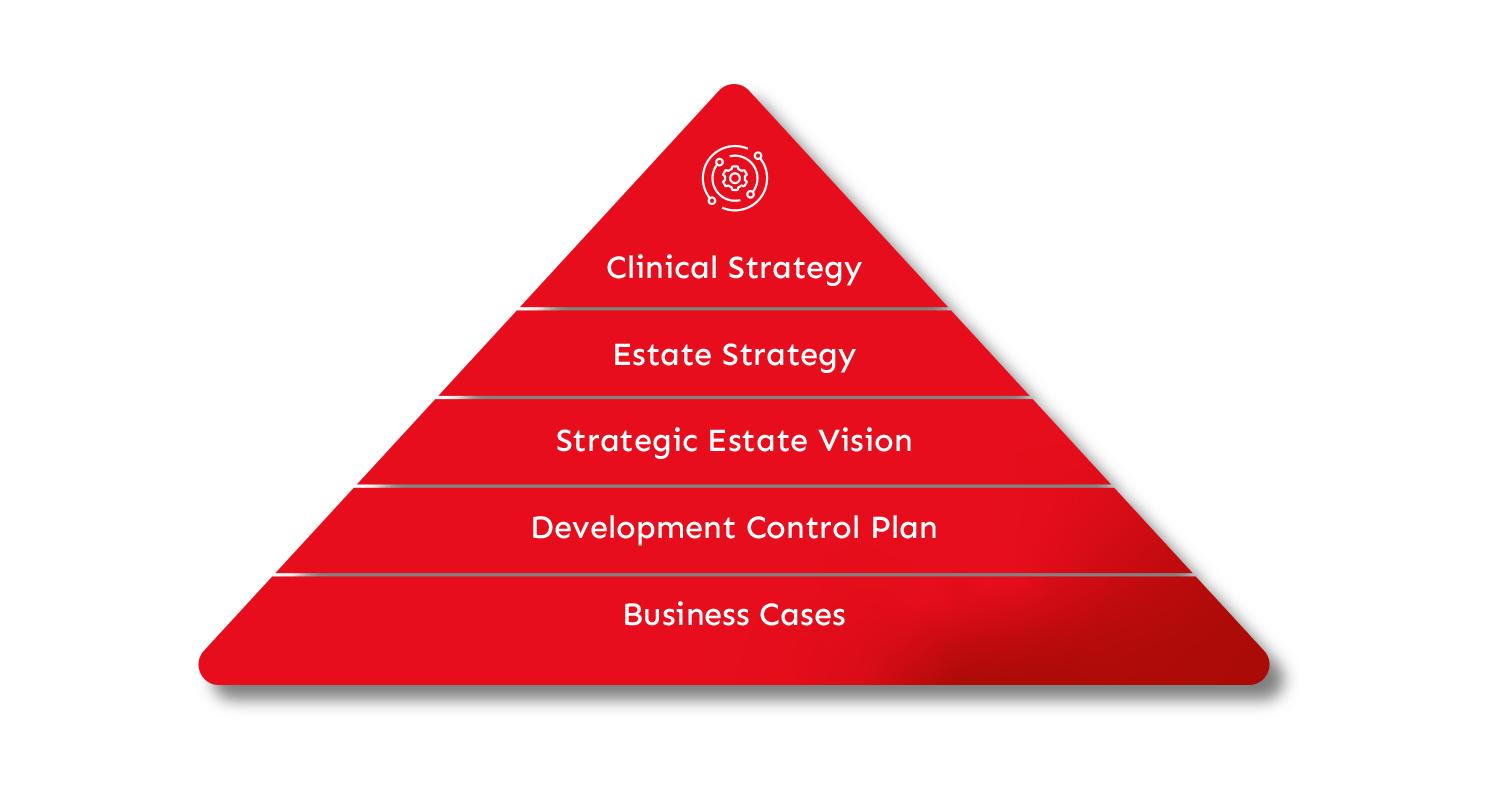
A hierarchy of rational analysis and proposals
The strategic estate vision explains why the estate must change.
The DCP explains how that change can occur.
Many Trusts find themselves expected to produce a DCP in the absence of a Clinical Strategy. Whilst far from ideal, a DCP can still be developed provided the planning process is informed by structured engagement with executive and clinical stakeholders. Simple, universal rules can be applied which hold true in most circumstances… identify dispersed acute, ambulatory and specialist functions across the site and develop a phased strategy for consolidation whilst relieving core clinical zones of unassociated support uses. At the same time, recognise uncertainty in funding modules, recognise flexibility and recognise that the DCP, as with most strategic plans, will never be built as envisaged.
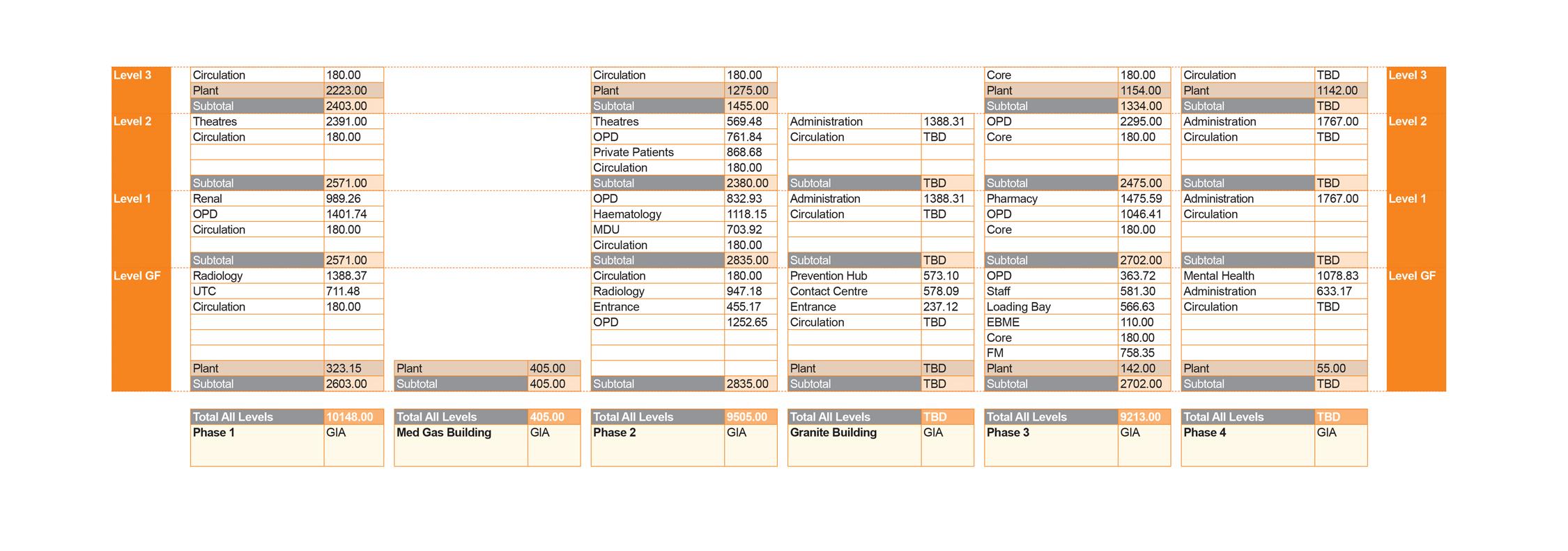
Stacking diagrams – to inform phasing and decant strategies
Planning for Uncertainty
Healthcare infrastructure programmes extend over decades. Political priorities change. Clinical services evolve. Technology advances. Planning policy develops. Funding remains uncertain.
The only certainty is change itself.
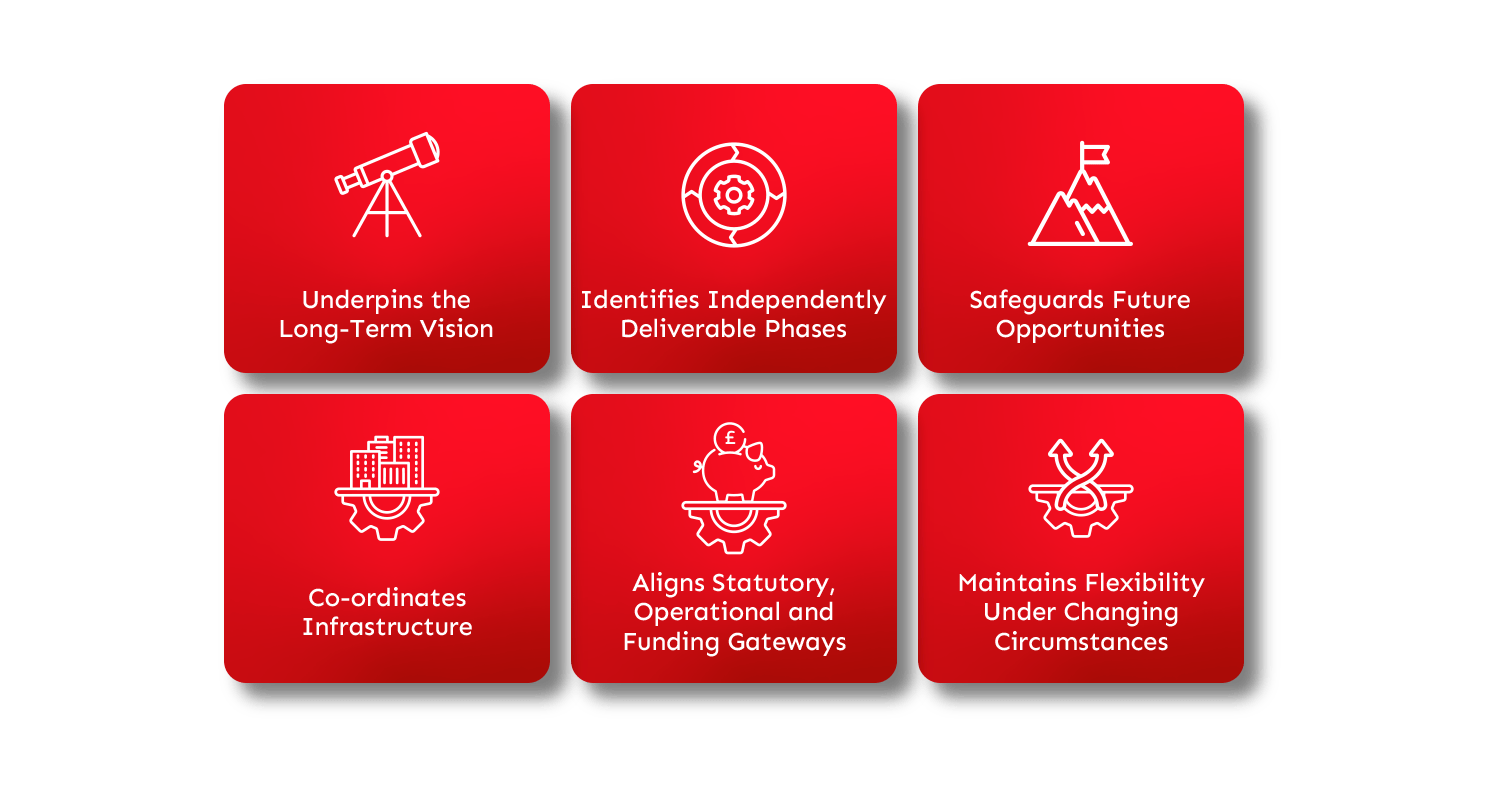
Accordingly, the DCP should never be understood as a fixed masterplan. Instead, it provides an adaptive strategic framework capable of responding to changing circumstances whilst maintaining a coherent long-term direction and informing tool for development. The DCP is strategically consistent whilst remaining tactically flexible, not a prediction of the future but a framework within which multiple futures can be accommodated.
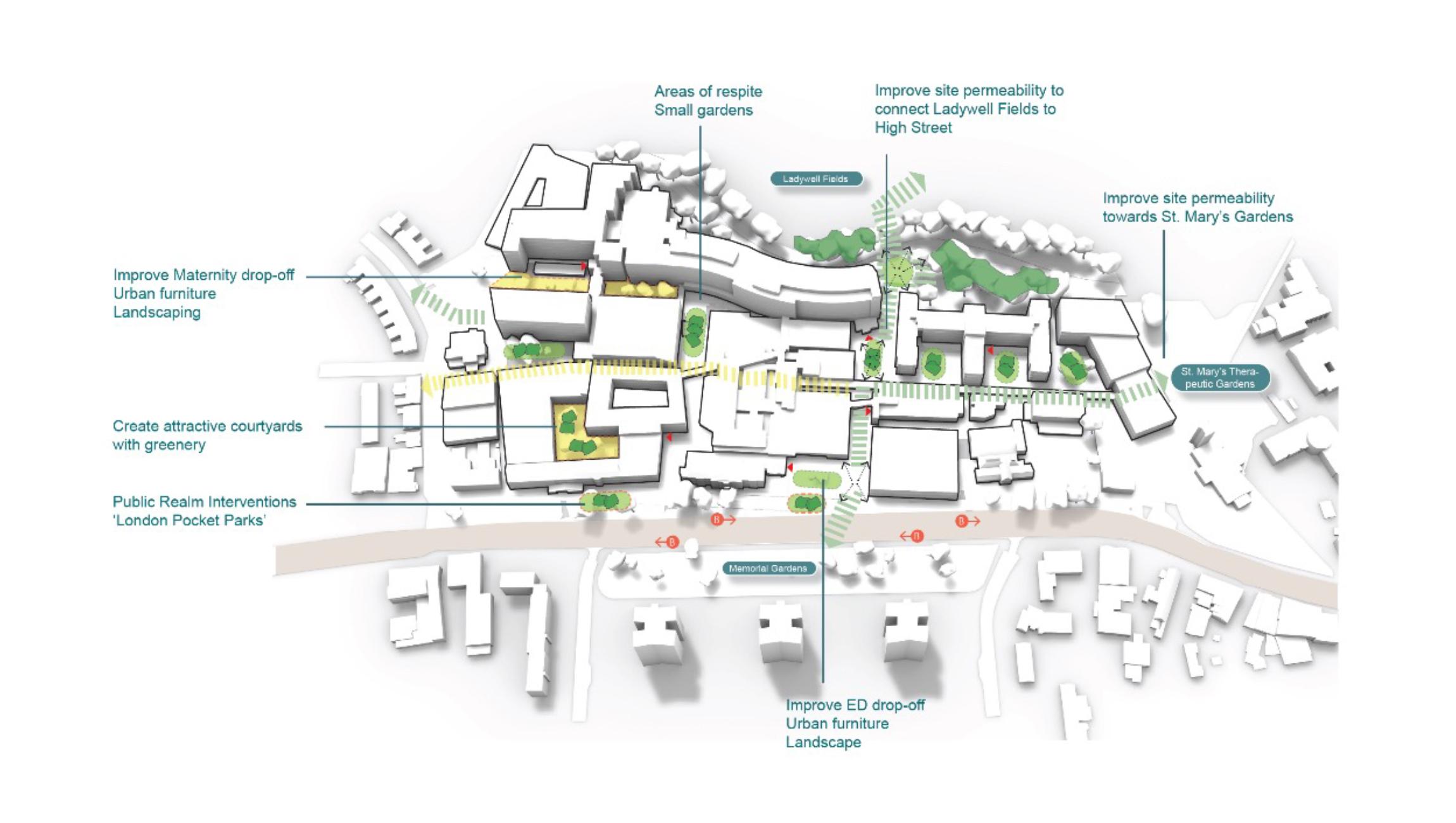
Public / private realm strategy enables dialogue with planning authority
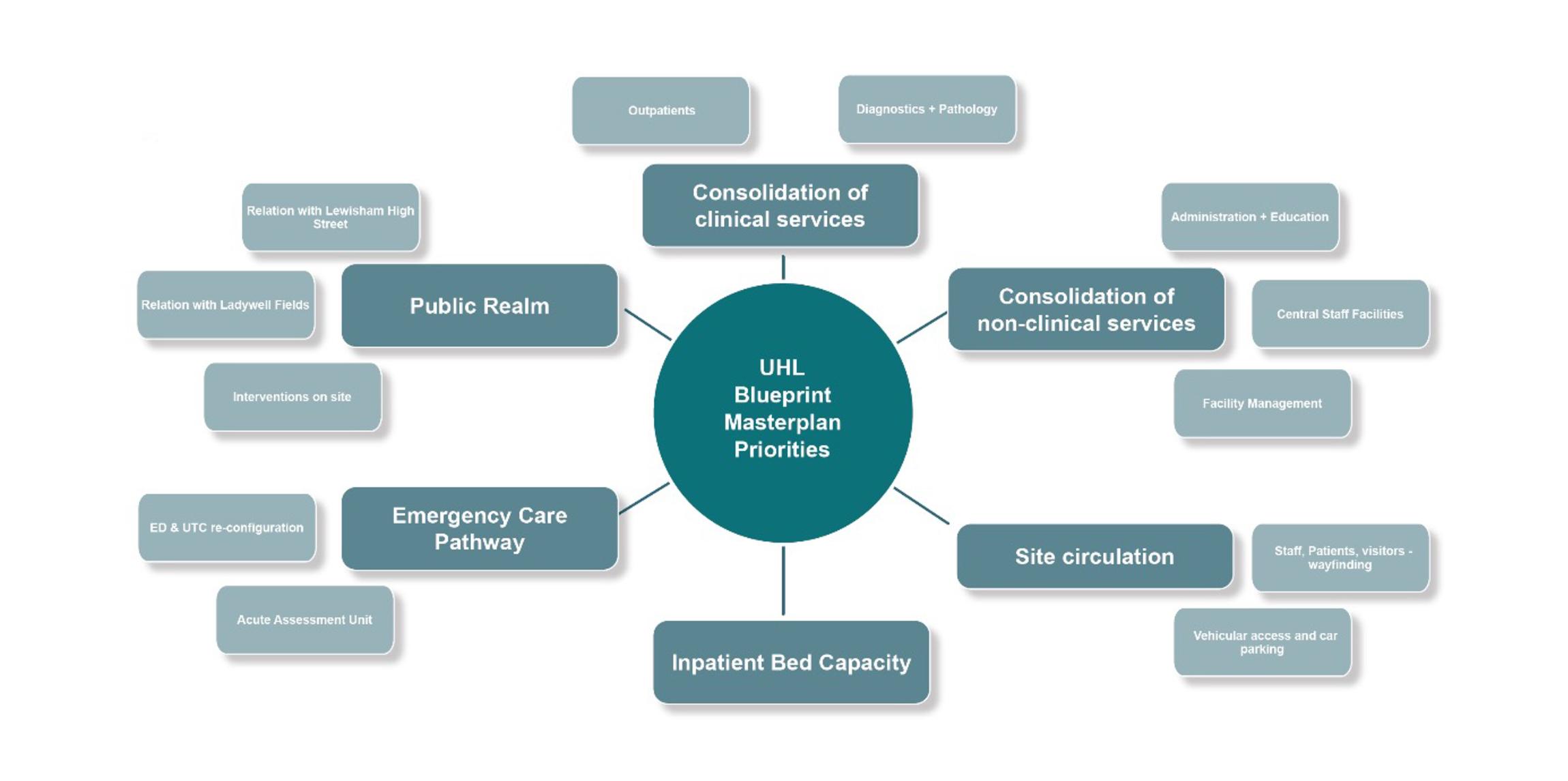
Executive priorities provide overall direction
‘Unfunding’
Perhaps the greatest challenge facing Trusts and their estates today is not simply underfunding but what might be described as “unfunding.” This paper uses the term “unfunding” to describe the condition in which estate planning is governed not by a predictable programme of investment but by uncertainty over the timing, scale and continuity of capital funding, together with the increasing re-profiling or withdrawal of previously anticipated investment.
Trusts increasingly find themselves required to re-sequence, re-scope and defer projects whilst preserving the integrity of long-term clinical transformation. In this environment, the DCP assumes a new strategic role. Rather than prescribing a single programme of works, it enables Trusts to respond opportunistically to partial, delayed or reprofiled investment without abandoning the overall vision.
The DCP therefore becomes not simply a planning document, but a mechanism for preserving strategic coherence in conditions of persistent uncertainty. The challenge however, is to identify how coherent clinical functions can be planned, designed and built to reflect inadequate or erratic funding parcels. There is no simple answer to this. The DCP can only point in the direction of travel.
Conclusion
The DCP has evolved considerably since its conceptual origins in the hospital planning philosophies of the 1960s. It is no longer simply a site plan. Nor is it merely an architectural masterplan. It is a clinically informed, strategically governed framework through which healthcare organisations translate long-term transformation into phased physical development.
In an era characterised by changing service models, evolving planning policy and uncertain capital investment, the DCP’s purpose is not to predict the future but to preserve strategic direction whilst enabling the estate to respond intelligently to whatever future emerges.
Any further questions?
If you have any further questions about this article, please contact us via london@ldavies.com or 0207 907 7900.